GORDEN'S OIL PAINTING
"The landscape is the vehicle. Oil painting is the destination."
BLOG:
Make Retirement a Masterpiece: Dive into Oil Painting Adventures!
Set forth on your artistic adventure with personalized guidance designed for mature retired or soon-to-be-retired professionals passionate about diving into oil painting. Bringing a depth of painting experience, I provide a clear roadmap to overcome obstacles such as starting your painting adventure, choosing the right materials, and making the most of your creative time. Unearth the art of picking captivating subjects and develop your ability to truly see and appreciate their essence, crafting truly engaging compositions. Enjoy the thrill of creating exquisite landscape paintings as you transform your creative ambitions into reality and build a timeless legacy of artistry.
No Landscape Photograph Is Entirely Satisfactory. Here Is What To Do About It.
In October 2021 I came around a curve in Yellowstone National Park and aspen trees in full golden yellow stopped me where I stood.
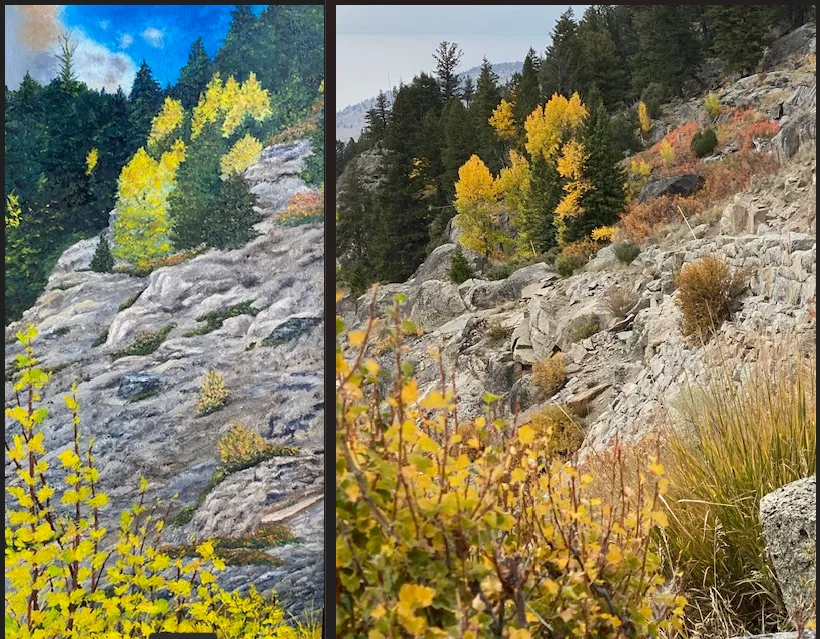
I photographed them. Two months later — at age 81, after a thirty-year pause — I picked up a brush and painted them. That painting is on the left side of the image above. The photograph that inspired it is on the right.
Look at the two carefully. They are not the same image. The photograph recorded what was there on that October afternoon — the specific light, the specific trees, the specific arrangement of rock and color that the camera captured in that instant. The painting records what I saw — the emotional weight of that moment, the specific golden quality of those aspens, the decision about what to include and what to leave out and what the painting needed that the photograph alone could not provide.
That painting was my first oil in thirty years. It was also the first time I applied consciously, in my own work, the principle that has governed every painting I have made since:
No landscape photograph is entirely satisfactory as painting subject matter without modification.
I had understood this principle intellectually for decades. In 1974 I painted a cityscape of Prague from a period photograph — moving a building across the river because the composition required it, borrowing a sky from a photograph I had taken from the fantail of an aircraft carrier in the Pacific because that sky belonged over that river. The painting that resulted never existed anywhere in the world except on my canvas.
But the Yellowstone painting was different. It was the moment I came back to painting after thirty years — and the first decision I made was that the photograph alone was not enough. The painting needed something the camera had not captured. It needed what I had felt standing there, not just what the camera had recorded.
The camera records. The painter decides.
Understanding that difference — and developing the confidence to act on it — is what separates a copy of a photograph from a painting.
Why No Photograph Is Entirely Satisfactory
A camera records everything in front of it without judgment. It does not know that the telephone pole in the middle distance is visually competing with the tree you wanted as your focal point. It does not know that the horizon line running exactly through the center of the frame creates a static, divided composition. It does not know that the flat gray sky on the day you took the photograph has none of the drama the scene deserves. It does not know that the parked car in the lower left corner has nothing to do with the mountain behind it.
The camera records all of it with perfect impartiality. Your job as a painter is to look at that impartial record and ask: what does this painting actually need?
Almost every landscape reference photograph you work from will require some combination of the following:
Removing elements that compete for attention, clutter the composition, or simply do not belong — telephone poles, parked cars, fences, signs, people who happened to walk through the frame.
Repositioning elements that are in the wrong place compositionally — a tree that would anchor the left foreground better than the right middle distance, a building that belongs on the near bank rather than the far one.
Adding elements the photograph does not show — a foreground flower mass that gives the eye an entry point, a cloud formation that gives the sky drama and movement, a figure that establishes scale.
Changing conditions the photograph recorded on one particular day — the season, the time of day, the weather, the quality of light. The summer waterfall that photographs beautifully in June can be painted as an autumn waterfall in October colors. The flat midday light in the photograph can be painted as the warm side light of late afternoon.
Replacing elements entirely — as I did with the Prague sky. The photograph showed what the Prague sky looked like on one particular day. The painting shows the sky that painting deserved.
The Five Questions
Before I touch a canvas — before I pick up a pencil to sketch — I ask five questions about every reference photograph I work from. The first four are compositional. The fifth is the most important.
One: Where does the eye enter the composition?
A painting needs a door — a place where the eye naturally enters the scene and begins its journey through the canvas. If the photograph does not provide one — if the strongest element is centered, or if there is no clear path into the image — that is a modification you need to make before the first mark goes down.
Two: Where does the eye travel?
Once the eye enters the composition, where does it go? A strong painting leads the eye through the canvas — from the entry point through the middle distance to the focal point, with supporting elements along the way that keep the eye moving rather than stopping. If the photograph's composition allows the eye to exit the canvas immediately or to get stuck on a single element, that is a problem to solve before you paint, not after.
Three: Where does the eye come to rest?
Every painting needs a focal point — the place the eye ultimately lands and wants to return to. In the Prague painting it is the dome of the cathedral rising above the river. In a landscape it might be a single tree, a mountain peak, a barn, a figure. If the photograph does not have a clear focal point, you need to create one. If it has too many competing for attention, you need to simplify.
Four: Is anything competing for attention that should not be?
This is where the telephone poles, parked cars, and fence lines get removed. Look at every element in the photograph and ask: does this serve the painting? Does it support the focal point, lead the eye, or contribute to the mood? If the answer is no — remove it. A painter is not obligated to include everything the camera recorded. You are obligated to make a painting that works.
Five: What does this reference show that the painting does not need — and what does the painting need that the reference does not show?
This is the question that separates copying from painting. The first half asks you to identify what to leave out. The second half asks you to identify what to add — what the painting needs to be complete, beautiful, and emotionally true — that the photograph on its own cannot provide.
This might be a sky from a different day. A foreground from a different place. A season the reference never showed. A mood the flat light of the photograph could not capture.
The Prague painting needed a sky that matched the weight and drama of the city. The photograph did not have it. A photograph I had taken from the Pacific two years earlier did. Those two references — Prague and the Pacific — became one painting.
The Yellowstone painting needed the specific golden light I had felt standing on that road in October — not just what the camera had recorded but what the moment had actually been. That feeling, brought to the canvas through every decision I made about color, light, and composition, is what makes it a painting rather than a copy.
Putting It Into Practice
The next time you sit down with a landscape photograph, do not begin sketching immediately. Spend five minutes with these five questions first.
Look at the photograph critically — not as a record of what was there, but as raw material for what the painting could be. Mark what you would remove. Note what you would move. Ask yourself what the painting needs that the photograph does not show.
Then sketch from your modified vision of the scene — not from the photograph itself.
This habit — practiced consistently across every painting you make — will change how you work more fundamentally than any technical instruction I can give you. It is the shift from copying to deciding. From recording to painting.
I came around a curve in Yellowstone in October 2021 and aspen trees stopped me where I stood. The camera recorded what was there. The painting shows what it actually was to stand there and see it.
That is the difference. And it is everything.
The camera records. The painter decides.
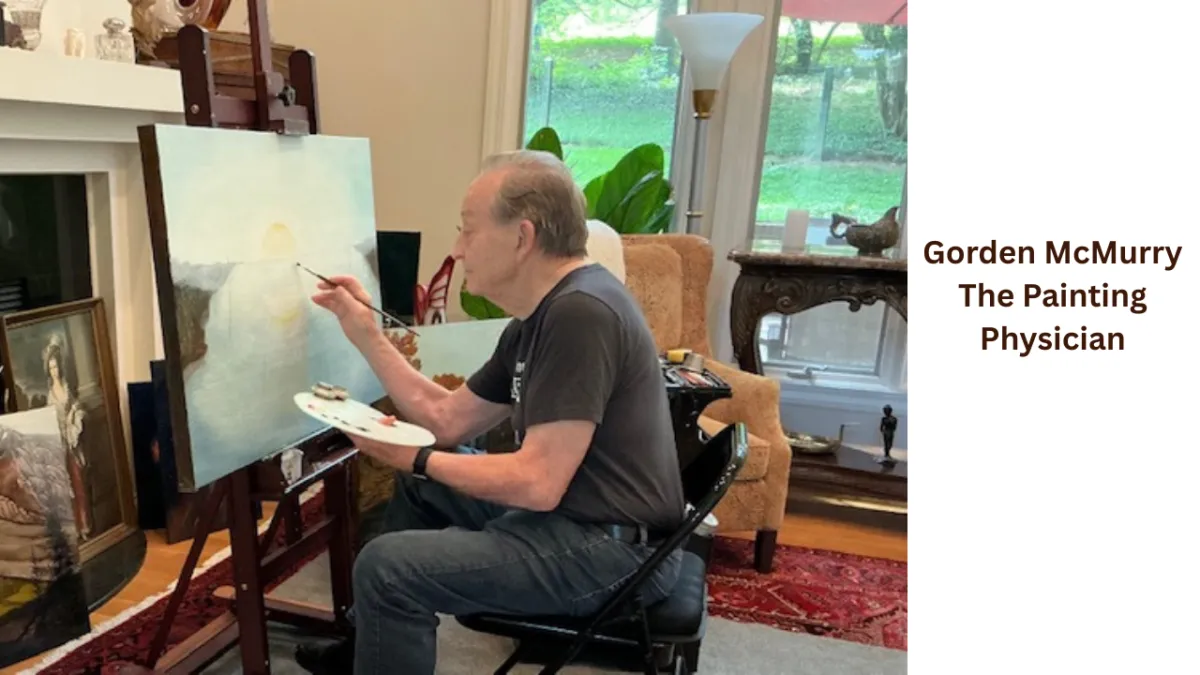
Gorden McMurry — The Painting Physician
Oil Painter · Landscape Painting Instructor · Ear Surgeon (Retired)
Kore Gallery, Louisville, Kentucky
gordensoilpainting.com · [email protected]


Unlock Your Inner Artist: Transform Your Dreams into Stunning Oil Paintings!
Gorden McMurry, a seasoned oil painter with over 60 years of experience, is uniquely qualified to help retired and soon-to-be-retired professionals achieve their artistic aspirations. After a successful medical career, Gorden returned to his passion for painting, producing more than 100 beautiful pieces and showcasing them at KORE Art Gallery in Louisville, KY. His journey started as a Paint-By-Number novice while a medical intern in Southern California which led him to becoming a skilled artist as a result of mentoring with a professional artist in California for several months. As a result, he has sold numerous commissioned works and has gained the practical knowledge and insight necessary to guide you on your own creative path. Imagine the satisfaction of creating stunning oil paintings that reflect your vision. With Gorden's expertise, you can transform your desire to learn into confident expression. He understands the challenges of balancing a busy career with artistic pursuits and is dedicated to helping you navigate this fulfilling journey—step by step. Join Gorden on social media to access valuable tips, inspiration, and a supportive community of fellow aspiring artists. Your journey to painting beautiful oil masterpieces is just a click away—don't let it wait any longer!

"The Splendor of a Peaceful Oriental Garden"
"The Splendor of a Peaceful Oriental Garden" invites you into a serene and enchanting world, where the harmonious blend of nature and traditional design fosters tranquility and reflection. This masterpiece captures the essence of an oriental garden with its meticulously
arranged elements — from the gentle arcs of stone bridges and the soothing flow of koi-filled ponds to the lush greenery and vibrant fall colors that punctuate the landscape with color. Each brushstroke reflects the garden's peaceful ambiance, encouraging you to pause and savor the beauty of balance and serenity in nature. Through this painting, experience the unrivaled splendor and calm of a tranquil retreat.

"The Beauty of a Yukon Sunset"
"The Beauty of a Yukon Sunset" captures the majestic splendor of the northern wilderness as the sun dips below the horizon, setting the sky ablaze with hues of gold, pink, and deep purple. This painting conveys the serene yet powerful landscape of the Yukon, where towering mountains and expansive forests stand in silhouette against the vibrant evening sky. The tranquil waters of a nearby lake reflect the colorful sky, enhancing the sense of calm and wonder. Each element of the composition centers on the interplay of light and shadow, illustrating the breathtaking beauty and tranquility of a Yukon sunset.

"A Nostalgic Castle in France"
"Nostalgic Castle in France" transports you to aby gone era, where history and romance linger in the air. This enchanting p"ainting presents a magnificent French castle, nestled amidst mountains and lush greenery. The intricate architecture, characterized by elegant turrets and timeless stonework, speaks of noble heritage and storied past. Bathed in the soft light of a setting sun, the scene is imbued with a sense of nostalgia and serenity. This painting invites you to step back in time and experience the enduring charm of a historic French treasure.

"The Glorious Upper Falls of Yellowstone"
"The Glorious Upper Falls of Yellowstone" captures the awe-inspiring power and majestic beauty of one of nature's great wonders. This painting vividly portrays the Upper Falls of the Yellowstone River, cascading with immense force and grace over a rugged cliff edge. The shimmering waters are depicted with dynamic brushstrokes, creating a sense of movement and energy that contrasts with the serene surroundings. Towering pine forests and rocky landscapes frame the falls. This artwork invites you to marvel at the grandeur and untamed beauty of Yellowstone’s iconic landscape.
This "I am a beginning painter and had been working on a painting for some time when the balcony wall simply would not look right. I asked Gorden for advice. He looked at it and explained immediately what was missing — the wall needed to be shaded darker, and the ground in front of it needed to be lighter. Those two small changes gave the wall depth, and the depth brought the entire painting to life. My painting is finished and I am genuinely proud of it."
— Sue F., Louisville, Kentucky
Work With Me
Success Stories
What Past Clients Are Saying
"I am a beginning painter and had been working on a painting for some time when the balcony wall simply would not look right. I asked Gorden for advice. He looked at it and explained immediately what was missing — the wall needed to be shaded darker, and the ground in front of it needed to be lighter. Those two small changes gave the wall depth, and the depth brought the entire painting to life. My painting is finished and I am genuinely proud of it."
— Sue F., Louisville, Kentucky
Here are the steps leading to the finished painting,
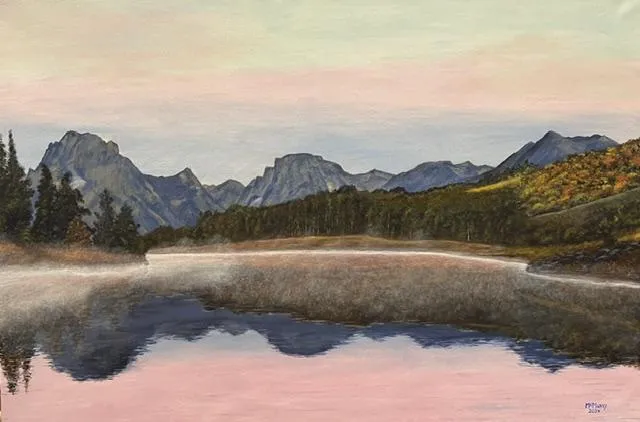
"Morning Mists on the Snake River"


FAQS
"Starting a new artistic journey can feel daunting, especially if you worry about not having prior experience. My program is designed specifically for individuals like you who are eager to explore their creative side, regardless of previous experience. We start with foundational techniques that are easy to follow, ensuring that you build confidence with each brushstroke. You will receive step-by-step guidance and personalized feedback, tailored to help you grow your skills at your own pace. Remember, every great artist was once a beginner, and with dedication and practice, you'll be creating paintings that you are truly proud of in no time. Together, we’ll unlock your hidden potential and develop your unique artistic voice."
While my program does include enriching group sessions that foster a vibrant community of like-minded individuals, I also place a strong emphasis on providing personalized feedback tailored to your unique artistic path. Each participant receives individual critique and support tailored to their needs and goals, ensuring that personal development is never overlooked. For those who prefer an even more personalized approach, I offer opportunities for one-on-one coaching to focus intensely on your growth and artistic expression. My aim is to support your journey in a way that best suits your learning style, ensuring you have the guidance and confidence to create artwork you’ll cherish."
My program is structured to offer comprehensive, step-by-step guidance, ensuring that each moment spent is rich with learning and creative growth. From mastering fundamental techniques to expressing your unique artistic voice, I’ve carefully crafted an experience that accelerates your progress in a supportive environment.
Participants frequently find that the joy of discovering and developing their artistic potential far exceeds their initial expectations, offering a sense of fulfillment and creativity that enriches their lives. Furthermore, the skills and experiences gained through my program often become a lifelong source of joy and expression, making their investment well worthwhile. Your journey in art is not just about creating paintings, but about joining a community, exploring your creativity, and building something that lasts."